



For years, the pharmaceutical industry’s AI conversation was largely associated with drug discovery, clinical trials and predictive models. Generative AI has broadened that discussion, bringing knowledge management, content creation and medical communications into the technology agenda.
The opportunity is significant. Deloitte’s 2025 life sciences outlook found that nearly 60% of executives planned to increase generative AI investments across the value chain, while its analysis estimated that AI investments by biopharma companies could generate value equivalent to as much as 11% of revenue across functional areas over the following five years.
Yet adoption does not automatically translate into business value.
McKinsey found in a survey of more than 100 pharma and medtech leaders that while every respondent had experimented with generative AI, only 32% had taken steps to scale it and just 5% reported achieving consistent and significant financial value from the technology.
That transition from experimentation to integration is where Articulate 2026, a conference organized by Prezent Vivo, will focus part of its discussion.
In biopharma, one of the less visible challenges of AI adoption is what happens after information has been generated or analyzed.
Scientific findings, clinical evidence and medical information must ultimately be communicated to people. That can involve researchers, healthcare professionals, regulators, commercial teams, executives and other stakeholders, each requiring different levels of context and detail.
AI can accelerate parts of that process, but the technology does not remove the need for scientific review and organizational governance.
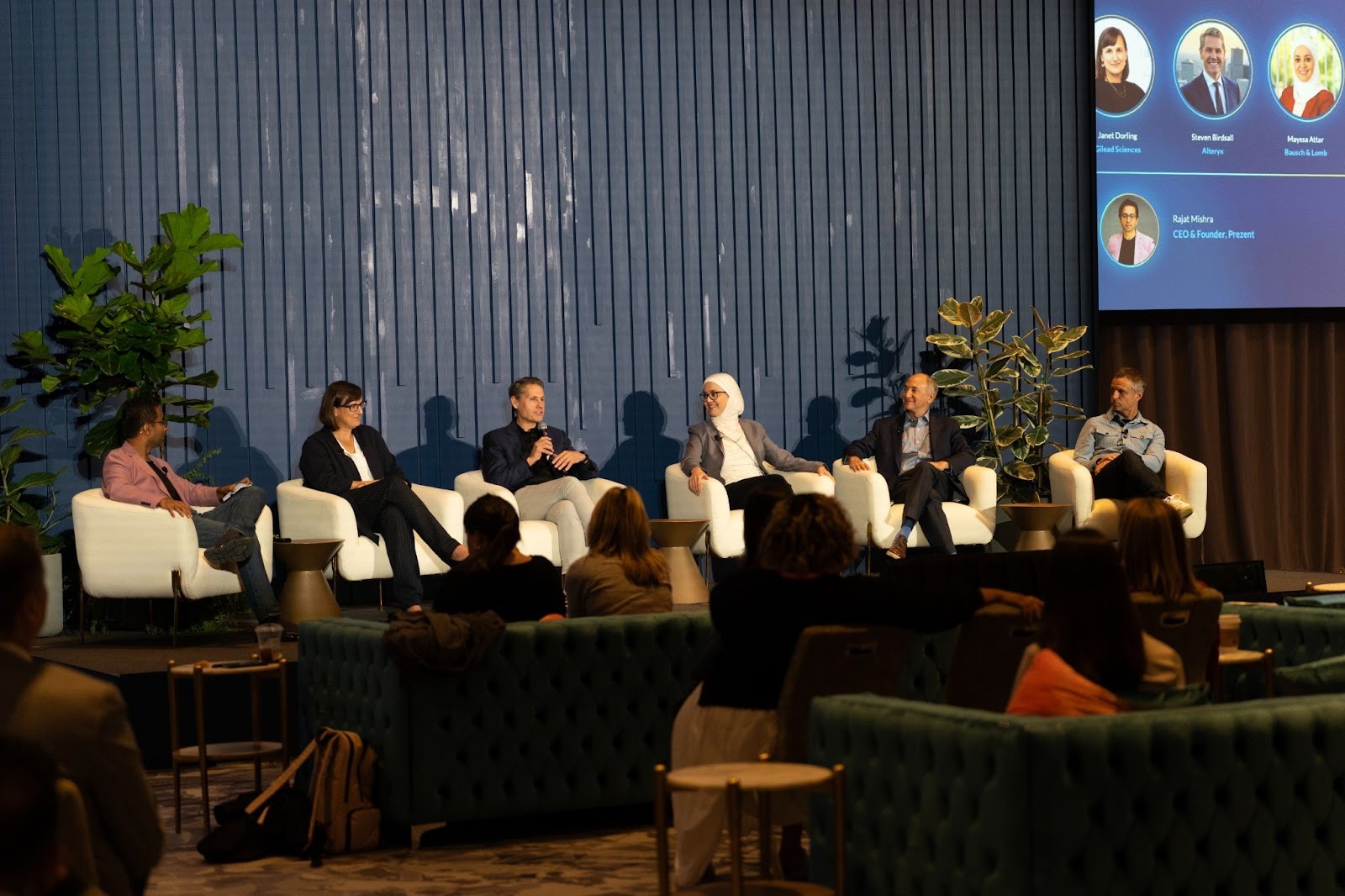
Articulate 2026 will bring together executives and specialists working across those functions.
The speakers include Aabhas Paliwal, Director, IT Business Partner at Amneal Pharmaceuticals; Alice Choi, COO at Prezent Vivo; Antti Kourula, Global Head of Market Access at CSL; Anubhav Srivastava, Associate Director – AI Engineering & Generative AI at Novo; Anupam Rastogi, Managing Partner at Emergent Ventures; Dymeka A. Harrison, MBA, Founder & Managing Principal at Blueprint Advisory Dx; Erin Krolikiewicz, Global Head of Talent Strategy, Pharma at Roche; and Francine Carrick, President at Prezent Vivo.
Joining them are Frank Desvignes, Founding Partner at True Global Ventures 4 Plus & 5 Opportunity Fund; Gwendolyn Whitney, Former President, US Commercial at Amicus Therapeutics; Jamie Leong, Global HR Business Partner at Discovery Solutions; Jeanna Cooper, Regional Medical Affairs Director- North at Crinetics Pharmaceuticals; Joe Walsh, Founder, Chief Product Officer at Canopy Life Sciences; Julie Guery, Global Regulatory Affairs Labeling Head at Sanofi; Kevin Kallmes, Chief Executive Officer at Nested Knowledge; and Kieran Chacko, BioTech Investor.
The program also includes Kristen Binaso, RPh, Senior Director, Professional Society Engagements & Educational Partnerships at BridgeBio; Lauren Pattani, MBA, AI Transformation Lead at Pfizer, Inc.; Manish Tewani, Director, HCP Marketing at Neurocrine Biosciences; Marine Queniart-Stojanovic, Senior Executive Board Member at Prezent Vivo; Matthew Skic, Director of Collections & Exhibitions at the Museum of the American Revolution; Mike Edwards, Executive Director, Marketing Strategy – Rheumatology at Novartis; Nick J. Romano, U.S. Oncology Director, Learning Strategy at Bayer; and Rajat Mishra, Co-Founder & CEO at Prezent Vivo.
The remaining speakers are Rebecca Goldstein, Executive Medical Director at Abeona Therapeutics; Sean Sheffler-Collins, PhD, Director, Scientific Communications & Content at Astellas Pharma; Steven Birdsall, Chief Revenue Officer (CRO) at Alteryx; Vijeta Makkar, Director, Radiopharmaceutical Strategy at Novartis; Vivek Mukhatyar, Medical Affairs AI Leader at Pfizer, Inc.; and Zhen Su, MD MBA, President & Chief Executive Officer at Marengo Therapeutics.
The mix of pharmaceutical, biotech, technology, investment and medical-affairs perspectives reflects the broader challenge facing the sector: AI adoption is no longer simply a technology project.
As organizations move toward larger deployments, questions around workflow design, governance, scientific accuracy and change management become increasingly important. Articulate 2026 will put those issues at the center of a discussion about how the industry communicates scientific knowledge as AI becomes part of its operating model.