


In 2012, the founder of a Madrid startup came home from a Spanish Chamber of Commerce tour of the Bay and went straight from the airport to find his chief technology officer. “He walked straight to the airport for me. It was like, Mathias, we have to go to San Francisco. I barely knew he was there,” recalled Matt Biilmann, the Danish engineer then running the company’s tech.
Biilmann flew out on a three-month visa waiver, came back convinced and moved to San Francisco that September. Two years later, he co-founded Netlify, a web development platform that has since raised $212 million USD (€192.3 million).
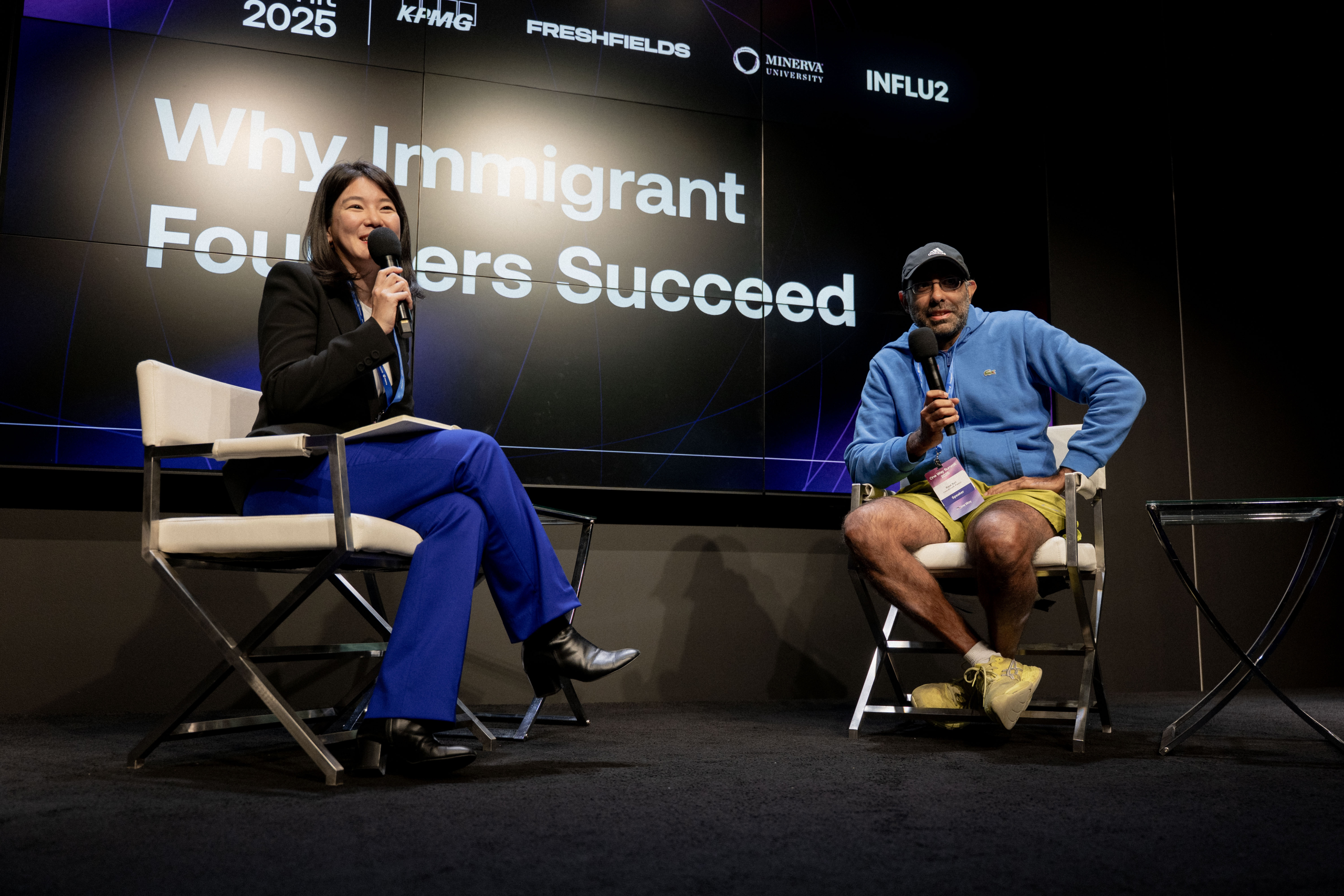
Speaking to Novobrief at the One Way Summit, a gathering of immigrant founders and investors in San Francisco in late October, he said what drew him there was a level of ambition he hadn’t found in Madrid.
Fourteen years on, Spain’s startup scene is barely recognizable. Spanish startups raised €3.1 billion in 2025, the biggest jump in venture investment since 2022, and the ecosystem is now valued at €125 billion. Funding then rose again in the first half of 2026 to €2.06 billion, and Madrid overtook Barcelona as the country’s top destination for capital for the first time.
However, reports conclude that Spain still struggles to produce companies that can compete globally, and 58% of that half-year’s money went into just 11 megarounds.
For the Spanish and Spain-trained founders and investors who made the move to California, the gap was never only about the money, though.
“We totally have to go”
Biilmann’s route to Madrid was unplanned. A former music journalist from Denmark, he followed a girlfriend to the Spanish capital intending to spend three months writing his master’s thesis, and stayed for seven years.
“Writing about music in Danish in Madrid is not a great career choice,” he joked. Biilmann turned his childhood hobby of programming into a job, rising from engineer to CTO at a Spanish company that built websites for small and medium businesses across Europe, at one point turning out around 100 sites a week.
When he and the company’s founder spun off a contest management startup, they incorporated it in Madrid. Within a month, the founder was on the Chamber of Commerce trip.
“Just get a three month ESTA, go to San Francisco, work on the startup from there, and then come back and tell me if we have to go,” Biilmann recalled him saying. “I came back and was like, ‘we totally have to go.’”
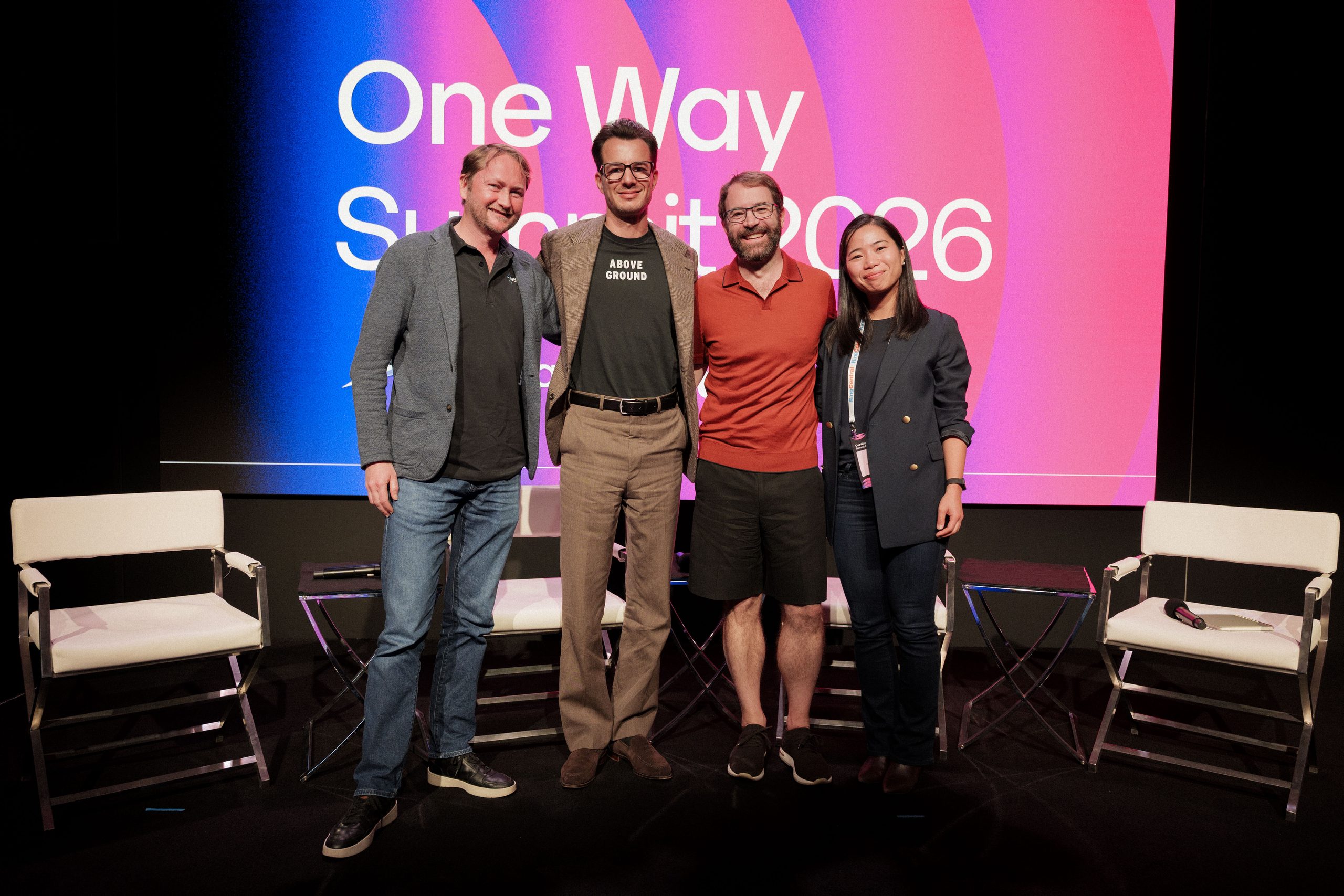
Courtesy of One Way Summit
Anna Piñol made a similar leap a few years later, from a career that was already going well in Spain. Originally from Barcelona, she helped launch Amazon in Spain in 2013 and ran some of its biggest retail moments in the country before leaving for an MBA at Stanford.
In California, she co-founded Jupiter, a Y Combinator-backed startup and later switched to the other side of the table. Anna is now a partner at NFX, a San Francisco seed fund that invests in the U.S., Europe and Latin America.
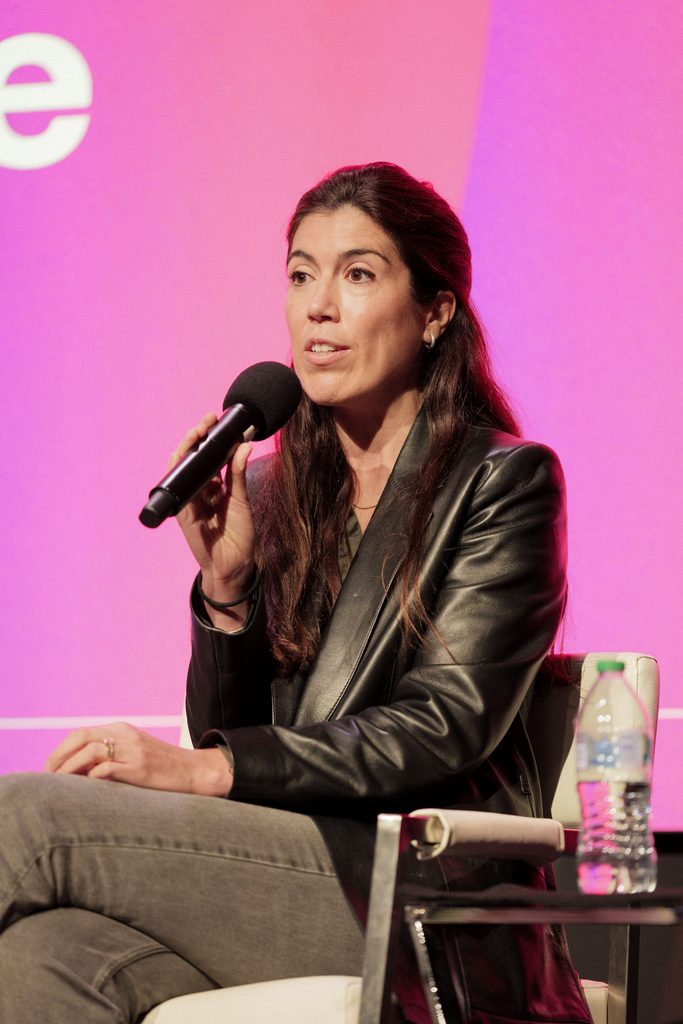
“Three of our partners, including myself, we came to the U.S. from somewhere else, as immigrants, and ended up starting companies here,” she told the summit’s VCs on the Immigrant Edge panel.
For both, the move was less dramatic than it sounds. “The culture shock from moving from Copenhagen to Madrid was in some ways bigger than from Madrid to San Francisco,” Biilmann said.
He also pushed back on the way Europeans tend to talk about the move. “In Europe, we have a tendency to think ‘USA’ and ‘Europe’. I moved to San Francisco specifically.” The Bay Area, in Biilmann’s view, “has something very special,” an ecosystem that “really fosters” ambition, and “Europe lacks some of those ecosystems.”
What happens if it really works?
What changed was the attitude toward risk. In Madrid, and even in Copenhagen, Biilmann said, early-stage founders faced “a level of fear, and people are thinking more about what could go wrong and why this won’t work, and what you should do to do it in a safe way, or not risk too much.”
In San Francisco, however, the pressure ran the other way. “People will push you on, shouldn’t you be more ambitious? Shouldn’t the idea be a little bigger? What happens if it really works?”
He traced the difference to how venture funds make their money. In the Bay Area, a single early cheque into a company like Uber could return an entire fund many times over, so investors go looking for outsized bets. “In Europe, you don’t have that many of those big exits, so VCs are more on what is the short-term profitability and exit,” he said.
In San Francisco, he added, investors ask whether a company “has the potential to change the world,” and that question filters down to every founder pitching them.
Piñol’s fund is built on that logic, and it increasingly finds those founders abroad. NFX doesn’t specifically target immigrant entrepreneurs, she said. “We’re a global fund looking to back the best founders in the world. It just happens that a lot of those great founders happen to not be born in the U.S., and increasingly so,” she laughed.
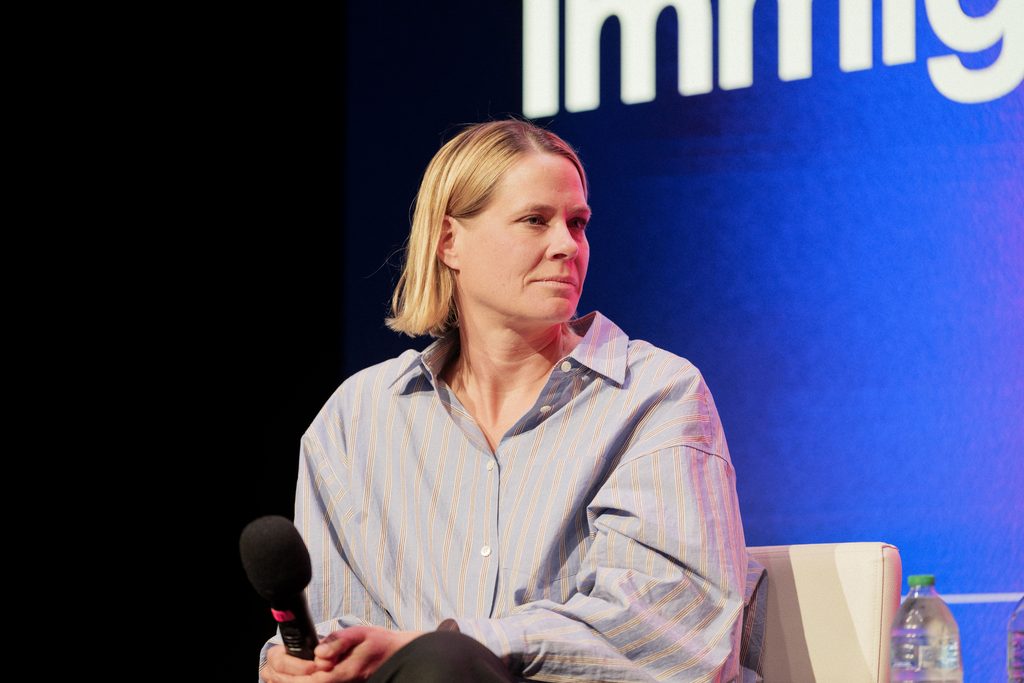
Sophie Lamparter, a Swiss partner at climate tech investor Vitamin C, told the same panel that European founders and research remain “a bit overlooked and undervalued compared to the U.S.,” and that “there’s just no other place than the Valley if you want to raise capital.”
Courtesy of One Way Summit
Biilmann was careful not to blame European talent for the gap. “I don’t think there’s any less entrepreneurial or creative people in Europe than in the U.S., not at all,” he said. “The sad thing is that often the people that have that urge to build something end up visiting here and getting that feeling.”
Decoding the playbook
Getting that feeling is one thing, but turning it into a funded company as a foreigner is another, and newcomers rarely fit the profiles American investors are used to backing.
Courtesy of One Way Ventures
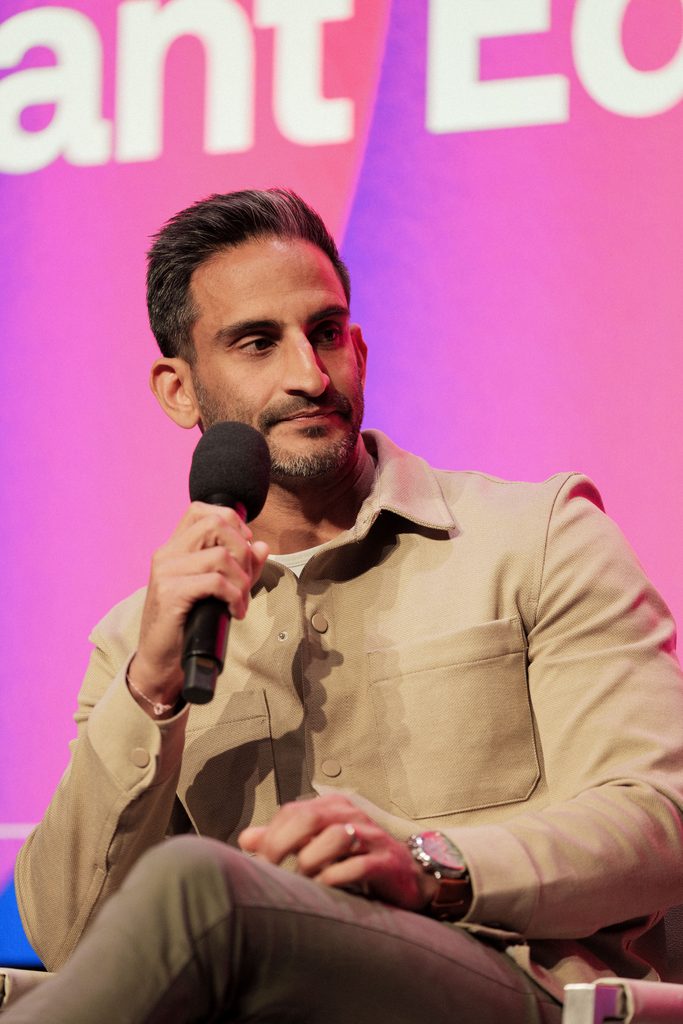
Manan Mehta, founding partner of Unshackled Ventures, described them on the same panel as founders who are “illegible, but personally very credible.” Piñol said that is where investors who made the move themselves have an edge.
“We know it’s possible, and we also know the nuances of it,” she said. “I think we can go a little farther because we’ve lived it, and more importantly, we can be great partners to this sort of founder, because we understand what it takes to not be from here and decode the playbooks that work here.”
Biilmann learned those nuances the hard way. By late 2015, his visa, the one “related to the startup from Spain,” was running out. The only route to a new one was proving that the intellectual property he had built was worth enough to count as an investment, which meant raising at least $1 million from reputable U.S. investors.
His lead investor then pulled its term sheet, other investors left for the holidays, and if he or his then-wife left the country, his work permit would no longer be valid. A small fund wrote the lead cheque on December 25.
“We were having Chinese food in one of their apartments,” he said. The round closed in early 2016. “It was really with a gun to the head.”
He is less sure he would make the same leap today. “I’m not sure I would have made the move in 2012 if this had been the atmosphere,” he said of political discourses pertaining to immigration. The question for newcomers now, he added, is “not so much is it possible to get the visa or not, but more the feeling of, are you welcome or not.”
Netlify’s distributed team is weighing Lisbon for its next company-wide gathering, partly because “some people are not very comfortable travelling to the U.S. right now.”
What Spain can offer now
That unease lands at a moment when Spain is working hard to attract the kind of people who once had to leave. An official evaluation of the country’s Startup Law, published in June, found that more than 2,100 companies have been certified as startups since 2023, and that residence permits under Spain’s international talent rules rose 286% between 2020 and 2024 to more than 91,000, driven largely by international remote workers.
The capital, though, still behaves the way Biilmann describes. Investors in Spain are prioritising profitability and recurring revenue over fast growth, and while the average deal in the first half of 2026 was €11.6 million, the median was just €2 million.
The large rounds that do happen are concentrated in a handful of companies, which leaves most Spanish founders raising modest cheques from investors who want to see a path to profit early.
Networks may matter as much as money. Piñol noted that NFX’s immigrant partners come from Europe, Latin America and Israel, and that their portfolio reflects it.
“Our access is a little more direct in those networks, so probably there’s a little higher representation,” she said. “It’s more a result of where we’re from.”
For Spanish founders, that means the compatriots who left are not only a loss. They can also be the bridge to the investors Spain still lacks.
Biilmann’s advice to European founders depends on what they want to build. “There’s many good paths that start with building in Denmark,” he said, and the same holds for Spain. “But if you’re the most ambitious and you want to optimise for the place with the most potential for building something truly ambitious, then it’s kind of a no-brainer to move here.”
Spain has become very good at attracting people who want to live there. Biilmann’s story points to the harder task, which is convincing the people who want to build something enormous that they can do it without catching a flight to San Francisco.
Featured image: courtesy of One Way Summit

Disclosure: This article mentions a client of an Espacio portfolio company.